Thursday, 7 May 2020

Instruction and testing Procedure of Gold For Indian Hallmarking centre


Instruction and testing Procedure of Gold For Indian Hallmarking centre
or Simple operating procedure 
INSTRUCTIONS FOR RECEPTION AND DELIVERY

  •         Start the balance in the morning and allow it time for warm-up, and check it.
  •      Welcome the customers. Provide customer with necessary comfort and courtesy.
  •       Brief the customer about BIS guidelines for accepting jewelry/artefacts for Hallmarking like, licence, solder, undesirable elements, existing marking, 4 marks, damage, hollow items, advanced stage of manufacture, fineness etc
  •        Check the identity of customer against the BIS License list available.
  •        Ensure that each item has adequate space for hallmarking and that there are no markings on the items. However, the item may have jeweler’s identification
  •         If space is found inadequate return the item to the customer.
  •        Collect the lot for Hallmarking after checking as per Annexure E 1 of IS 15820.
  •        Issue acknowledgement with delivery date and time mentioned.
  •        Deliver hallmarked and rejected Jewelry and cornets/silver chloride against production of receipt when the customer comes for taking delivery.
  •         Issue invoice and collect necessary charges.
  •  If jewelry is to be dispatched, then place hallmarked jewellery, rejected jewellery and cornets/silver chloride in separate bags with proper tags/labels and placed in a box of rigid material with cotton wrapping inside along with invoice.
  •         Persons with purpose other than assay and hallmarking should be confirmed by reception only and be directed to the Managing PROPRIETOR or Quality Manager. Employee concerned will be called to the reception for meeting with such visitors.
                                                                                                      

 INSTRUCTIONS FOR XRF

  • Start XRF Analyser in the morning, allow warm-up time, Check the XRF machine using the reference standards.
  • Receive the Jewelry along with the job card giving details of jewelry type, quantity and weight.
  • Segregate the jewelry according to the type of ornaments (Example Bangles, chain, Rings etc.).
  •       Based on the declaration of the jewelry, screen each piece for purity on XRF as per the recommendations of the XRF machine manufacturer and presence of prohibited elements/metals such as cadmium, ruthenium and Iridium in gold articles/artefacts and lead and cadmium in silver articles/artefacts. In case of long and heavy pieces with variation identify the location of the lowest purity.
  •       Reject the jewellery if it is (a) not homogenous; (b) very different from the declared purity; (c) not at sufficient advance stage of manufacturing or all the parts are not in position, and (d) presence of elements prohibited as per IS 1417 or IS 2112. 
  •         Segregate the lot based on results obtained as follows and keep jewelry in trays/boxes/bags identifying the purity with the help of colored tags/labels   RED-REJECTED,  will be  WHITE  Marginally Pass GREEN – Pass (more than 1 ppt. below the declared value) for example in the case of 916,  items will be ‘RED’ if above than or equal to 911 but below 915, ‘’WHITE between 915 and 917 and ‘GREEN’ above 917
  •       In each purity identify the item (s) with lowest purity by tagging
  •        Items having presence of Ir, Ru, Cd or those different from the lot or more than 5 ppt below the declared value are to be separated with indication of the same so that these are not sampled or tested further
  • Return the segregated lot to the Quality Manager
  • Enter results in the XRF section of the Job card.


INSTRUCTIONS FOR SAMPLING

  • ·                Keep the sampling tools in ready to use condition

  • ·           Collect the jewelry for sampling from the Quality Manager in separate plastic boxes/ polythene pouches segregated into homogenous lots based on purity and type and pattern of the jewelry along with necessary instructions regarding the method of collecting the samples form each lot.

  • ·         Sample size will be as per the approved sampling plan of BIS (refer ANNEX D & E of IS 15820-2009)

  • ·            Collect required amount of samples from each lot. Ensure that the item with the lowest purity is included in the items from which sample is drawn

  • ·                For cast items take cut samples from the spruce left by the manufacturer. In the case   of identical and homogenous articles take samples at random. From soldered items take samples from any place from the body of the item including soldered joints. For non-homogenous items like necklaces prepare samples by scrapping or cutting from different places

  • ·                Make effort to take about 500 mg samples without damage to the jewelry. In case it is not possible or when the number of items is more take composite sample of required mass by scrapping 10mg or more of samples from each jewelry. Ensure that the ratio of composite sample prepared is appropriate to the size and the weight of the jewelry.

  • ·                Take Minimum 500 mg weight of sample and maximum weight 1 g and in exceptional cases sample of size up to 125 mg is also taken in case of gold and about 3g in case of silver.

  • ·                The method of collection of the sample should be recorded in the Job Card and the Sample Envelope/ Assay Sheet along with the weight. Note on the pouches the code number and the first alphabet of the color of the tag e.g. ‘W’’ for    ‘WHITE’’, sampling method and item to indicate the categories from which the samples were taken·   Identify the sample and record on the sample envelope/ assay sheet and return to the Quality Manager in small pouches along with the jewelry.


INSTRUCTIONS FOR OPERATION OF BALANCE


  •         The balance shall be  kept on a vibration free stand./table

  •       Maintain the room temperature below 30 0 C.

  •        Check the level of the horizontal surface with spirit level.

  •        Check the balance with any one dead weight once a day.

  •      Reset the tare weight with weighing pan.

  •      Keep track of servicing due dates.

  •         Clean the machine regularly.

  •       Do not disturb the position of the balance.

  •              Ensure only authorized personnel use the balance.


INSTRUCTIONS FOR WEIGHING

  •        Detailed procedure is as per IS 1418 in case of gold. Prepare two proof assay samples of about 150mg each and add copper proportionately to the expected amount present in the majority samples
  •         Prepare samples in duplicate for assay between 125 mg and 250 mg (± 0.01 mg),so that the approx. mass of gold in samples is around the same as that in  the proof gold sample
  •         Place the sample in assay grade lead foil. If the sample weight is less than or around 200 mg use 4 g of lead. For more than 200 mg sample use 6g lead,
  •         Add silver 2.3 to 3 times the weight of fine gold present in the sample. Sample Weight x 0.916 (OR DECLARED fineness) x (2.3 to 3) and in case fineness is 990 ppt or more, remember to add 20 + 5 mg of copper to the samples also.                                             
  •         Fold them into balls of 10 mm diameter.


INSTRUCTIONS FOR CUPELLATION & ANNEALING

  • ·        Place the samples in the pre-heated cupels in the left to right order  and charge them at 1050ºC to 1100ºC in the furnace, maintaining oxidizing atmosphere.

  • ·        Place the proof assay gold too in the same manner noting down the placement of   the samples and check gold in the assay register.

  • ·        Record the time on the Board

  • ·        Allow the samples for cupellation inside the furnace for 25 minutes. Note the time of ‘cut off’ for reducing the temperature. 

  • ·        After the oxidization is complete cool the buttons formed, remove from Cupels and clean it with a hard nylon brush.

  • ·        Flatten the buttons with hammer

  • ·        Anneal the flattened button at around 7000C

  • ·        Roll them to 0.12 to 0.15 mm thick strips

  • ·        For identification and traceability number the strips using punches

  • ·        Roll them to form loose cornets, keeping the dirty side up and numbered side out


 INSTRUCTIONS FOR PARTING
  • ·                   Place the cornets in parting tray
  • ·                   Take enough Acid 1 (sg=1.2  /  200 Acid 300 Water) to dip the cornets in a beaker and place it on the hot plate.
  • ·                   The quantity of acid shall be adjusted so that the samples are fully immersed in acid during the test.
  •                   Immerse the parting tray in the acid when the temperature is around 900C,
  •                  Boil gently for 15 minutes or when fumes stop emanating,
  •                   Decant, wash with warm water and dry,
  •                   Take enough Acid 2 (sg=1.3 /  300 Acid 200 Water) to dip the cornets in a beaker and place it on the hot plate.
  • ·                   Immerse the parting tray in hot acid,
  • ·                   Boil gently for 15 minutes or when fumes stop emanating,
  • ·                   Decant, wash with warm water till free from silver nitrate and dry,
  • ·                      Place the basket/tray in muffle furnace at 700 - 750ºC for 5 minutes.


INSTRUCTIONS FOR FINAL WEIGHING AND CALCULATION OF PURITY
                   After cooling weigh the samples
  • ·        Calculate the Delta in the following manner:
∆ = ∑(Initial Check Gold Weight- Cornet Weight of Check Gold)
                     Number of check Gold Samples        
  •                         Calculate the purity of the test piece with the following formula
         W=     (m2 + ∆)X 1000         All Weights in mg
                                 m1
               m2 - Weight of Cornet, m1 - Weight of Sample
Difference in two samples tested       ≤ 0.5 – Satisfactory testing
                                                       >0.5 discard and repeat test
Pass Jewellery which has average fineness of two samples ≥ declared fineness in case of satisfactory testing. In case the fineness is 990 ppt. or more, the ∆ for proof samples run in parallel should not differ by more than 0.04 mg. If it is more, then repeat the assay samples ≥ declared fineness in case of satisfactory testing
 

INSTRUCTIONS FOR MARKING


·        The Quality Manager to take the jewelry from the safe along with relevant details like identity of the BIS licensee and give the jewelery to the Laser Marking In-charge to mark in BIS approved sizes in case of conforming jewelry the following:


i)                   The BIS Standard Mark
ii)                Purity in carat and fineness (parts per thousand)
iii)              Assay Centre’s identification mark/number
iv)              Jeweler’s identification mark/number

·        The marking process will be as recommended by the manufacturer of the laser marking and all the security procedures will be strictly adhered. The Q Mgr/ Managing PROPRIETOR will check that the marking is in order.

·        In case of non- conforming jewelry ‘O’ will be marked or returned without marking.


Rock and Minerals

Rock and Minerals 
 Our earth is made of  soils  and rock. rocks  are found  everywhere  in mountains , sea s and ground. All rocks on the  earths  are made up of  minerals . some rocks  contain only one minerals , while , other may contains  many minerals .


 Rock Crystal, Clear To White, Gem Top
 
Types of rocks 
 On the basis of  their  formation, rocks  are of three types  igneous, Sedimentary and  metamorphic 
Igneous rocks 
 The  centre of  the earth is made of  hot molten rock called magma .When a volcano erupt , this magma flows out  onto the surface  of  the earths . The magma that reaches  the surface  of the earths  is called   larva . Larva cool down and  solidifies  to form hard rocks  igneous rocks .
Type of igneous rocks 
1.Basalt : It is  an igneous rock formed  by the rapid cooling  of the larva  on the earths  surface . it is  dense and dark in color  and  has fine  grains . The edge of this  rock is  called  is very sharp. They are called scoria  rocks.
2.Granite : It is formed  when magma cools below the earths  surface , it is  the most  common igneous rocks . It may be black, grey, white or pink in colour. it is very hard and therefore, used  for flooring of houses , making  statues and paving roads
3. Pumice : It is  light , grey or cream- colored  rock formed by quick cooling  of frothy lava . It is  the only rock  that float . It  has many holes  because  of   the air  trapped  insides  it can float . it  has many holes  because  of the  air  trapped  inside  it at the  time  of its  formation .
 it is used  as  scrubbing  stone  to remove  rough dead  skin from the body. Dentist  use  powdered  pumice for polishing  our teeth
4. Obsidian : it is formed  by quick cooling  of larva . it looks like  a  glass and is black in co
lour . due  to its  sharp edges, it  is use  in making  or cutting  of jewellery. 
Sedimentary rocks
Sedimentary rocks  are formed  from pebble , sand  mud  or clay that gets  deposited in seas and oceans . Repeated  heating  and cooling  of mountain by  rain, wind  and  sunlight  wear down the rock. These small pieces  of rocks  are  carried down by rivers  and  strong  wind s into the lakes  and seas . They sink to the  bottom and  settle  down from  layers called sediments . As the time passes  by , more  sediments  build up that press  down the layers.  continuous pressure  upon the lower layers  hardens them into rocks . Such rocks are  called  Sedimentary rocks . major  portion of the earths  surface is covered  with sedimentary rocks  .
Types of sedimentary rocks 
1.Sandstone : It is formed  when small particles  of sand  get compressed  and  cemented  together . Sandstone  mostly consist of  a  mineral called quartz. it is  widely used  for making  building . Many of our  old building  in Delhi, Agra  and Rajasthan are  are made up of  sandstone .
2. Conglomerate : it is solid  mass of pebbles , sand  and  gravel cemented  together  with minerals like  silks  and  calcium carbonates . It is mostly orange  or grey in colour . it  can be  withstand  weathering . it is used in construction and  for polishing  ornaments .
3.Shale : it is a smooth sedimentary rocks  formed  when  layers  of  clay hardens . It is  used  to make  tiles  and bricks 
4. Limestone: Lime stones  are made  of minerals  called  calcite  this minerals  comes  from Shells  of sea  creatures. when shells and skeletons  of millions of  tiny sea  creature s  settle down in the sea  bed , that from layers . These layers harden to form limestone . Chalk is a limestone  rock. cement  and lime  are also made using  lime stone . it is  also used  in  making  glass and  for separating  pure metals  form their ores .
Metamorphic rocks 
 Metamorphic rocks  are formed   from igneous rock or sedimentary rocks . when igneous rocks  or sedimentary rocks  are subkjecteds  to immerse    heat or pressure  inside the earth's , the  minerals  content  of these  rocks  changes . these   changed  rocks  are known as  metamorphic  rocks . These  changes  make  them harder  and   tougher .
Types of  metamorphic rocks 
1. Marbles : When lime stone I A sedimentary rock ) undergoes  several changes , it form marbles . It is found  in various  colour . It  can be  carve and polished  easily . it is used  for making  writing  slates  blackboard and roof  tiles .
2. Slate: When shale ( a sedimentary rocks ) undergoes several changes  , it forms  slate . It is dark grey in colour . It can easily  be split  into thin sheets . it is used  for making  writing  sltes  black board  and roof  tiles .
3.Gneiss : when granite ( an igneous  rock ) undergoes many changes , it form gneiss. during  its formation, the  minerals  within it get separated  to  form light  and dark bands of  different  colours  that can be seen separately. it  often glitters  because  of the   presence  of shiny mica 
 4.Quartzite: When sandstone ( A sedimentary rock) undergoes  several changes , it form Quartzite . It is  a hard  rock and can even scratch steel. it is used  to make  Statues  . It  is  also used  in making  glass and  in  ceramic industries 
Minerals :
 Minerals  are underground natural resources . Some are simple  substances and  some  are complex ones . rocks are also formed from minerals . Coal and marble are  examples of non metallic  minerals  Hematite and   bauxite  are some  examples  of  metallic minerals 
Uses of minerals  and  Rocks :
 We use various  rocks and mineral in our  daily life in different  ways :
1. We get useful metals from the rocks :
 Different metals are extracted  or mined from minerals . A minerals  from which metals  can be extracted  is called  an ore . We get iron, aluminum , copper , and zinc  from hematite , bauxite , copper  pyrites and calamine  ores  respectively. These metals  are commonly used  for making  utensils , machine , furniture , wires, etc . precious metals  like  gold , silver  and platinum are used  for making jewellery. 
2. we get  fuels  from rocks and minerals 
 Coal, petrol, diesel, kerosene , LPG, CNG, etc  are fuels  that we  use  in our daily life .
1. Coal: It is valuable natural resource . it is formed  from the remains of plants and  animals  buried  millions of years  ago. Due to high temperature and pressure  inside  the earths  these  remains  of plants  turned  into coals . It is widely used  for cooking  , producing  electricity , making plastics ,nylon, fertilizers and  in various  industries  as fuels .


 Bbq, Barbecue, Coal, Flame, Grill

 Road Sign, Cng, Gas And Service Station


2. Petroleum : It is dark colored  , thick crude  oil, It is  also called  black gold . Petroleum was  formed when plants  and  animals got buried  under  the  sea  millions of  years  ago. Due  to  high pressure  and temperature , their dead  bodies  got  converted  slowly into  petroleum.
We get LPG, CNG, petrol, diesel and kerosene  from petroleum, it is used  in automobiles  as fuels  and  in making  chemicals  paints , plastics , fertilizers , medicines  cosmetics  and produce  electricity .


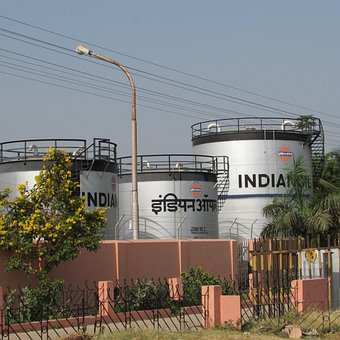
 Railway Fuel Tanks, Hospet, India


3.Uranium: It is  not a minerals  but  found  with mineral. It is used  for producing  tremendous amount of energy . This  energy is called  nuclear energy . Atomic  power  plants  us  uranium to produce  nuclear energy.


Nuclear, Hazardous, Hazard, Radiation
3. We  get Gemstones  form the rocks
 Many minerals  are  very hard and found  in the form of  crystals . They are cut and polished  into beautiful stones  called gemstones . Diamond , ruby, emerald  and  sapphire are  some  gemstones 
used in making Jewellery.


 4. We get Fertilizers  from the minerals 
 Some  of the minerals , like  sulfates  and nitrates  are  added as fertilizers  to the  soil fertilizers  help to maintain the soil fertility and  improve  plants  growth.
5. Minerals  are Important  Nutrients :
Our  body needs  minerals  like  sodium, potassium, calcium, zinc and iron in small quantities , for health growth  Need to Conserve  natural resources Coal and petroleum are very  useful natural resources  of energy. The consumption of  these  fuels  is increasing  day  by day due to large numeber  of vehicles  and industries , however , these  is  a limited  amount  of these  resources on the earth. Once  these  resource used  up, they will not be available  again. also burning  of these  fuels  release  harmful gases , in the atmosphere  causing  air pollution which is  the  biggest heals  hazard 
Judicious and economical use  of these resources  can help us  to conserve  them and  prevent  pollution. we should  conserve  these fuelsd  by using  alernate  resources  of energyt like  solar  enerfy, wind , energy. These are unlimited  and do not cause  pollution .

States of matter solid liquid and Gases

States of matter solid liquid and Gases
All things, whether living or non-living, are made of matter. Anything that has mass and occupies space is called matter. Table, chair, water, milk, air, etc., are matter. matter is made up of very small particles called molecules. on the bases of arrangement of molecules, matter exists in three states-- solid, liquid and gas.
ARRANGEMENT OF MOLECULES
Solids: In solids, molecule;es are very closely packed. there is a strong force of attraction between them. They cannot move away from one another. So, solids are hard, rigid, have fixed shape and volume, and cannot flow.

Liquids: In liquids, the molecules are not very close to one another due to weak force of attraction between them. So, the molecules in liquids can move and slide over each other. This makes liquids flow. Liquids take the shape of the container in which they are poured into. So, liquids do not have a fixed shape but have a fixed volume.

Gases: In gases, the force of attraction between the molecules is the weakest. So the molecules in gases  are far apart from one another and they are free to move. This makes the gases flow easily and fill the container completely in which they are kept. So, gases neither have a fixed shape nor a fixed volume.
CHANGE OF STATE
In previous classes, you have learnt that the state of matter can be changed from one form to another on heating or cooling. Do you know how this happens? Do you know how this happens? Let's see the effect of heating or cooling on the molecules of matter.


EVAPORATION


The change of a liquid into gaseous state on heating is called evaporation. When water is heated, it changes into water vapour. This is because, on heating, water molecules start moving faster. they become free and escape into the air in the form of water vapor and can move much more freely.

Condensation 
When steam gets cooled, it condenses to form water again. This happens because on cooling steam, the movement of water molecules becomes slower. They start moving close to one another. They become less free to move and thus come closer to one another to form water. The change of a gas into liquid state on cooling is called condensation.


Glass, Water, Condensation, Cold, Ice
Melting 
Ice is solid. When it is kept at a warm place, the movement of molecules of ice increases. They become free from the rigid form and thus become loosely packed and form water. The change of a solid into liquid state on heating is called melting.Antarctica, Ice, Caps, Mountains


Freezing
When you cool water, the movement of its molecules slows down. They come very close to one another and pack into a rigid shape to form ice. The change of a liquid into solid state on cooling is called freezing.


Illustration, Christmas, Background
SOLIDS IN WATER

Take a glass of water. Add a few crystals of sugar in it and stir. You find that the particles of sugar disappear. Where have the sugar particles gone? The particles of sugar take up the space between the molecules of water. So, we say that sugar gets dissolved in water.

LIQUIDS IN WATER

You must have seen a painter removing paint from his hand by using turpentine oil, not with water. This is because paint gets dissolved in turpentine oil and is easily removed, whereas it does not dissolve in water.

Some liquids when mixed together dissolve in each other. They are called miscible liquids. For example, liquids like glycerine and milk dissolve in water. Some liquids when mixed together do not dissolve in each other. They are called immiscible liquids. For example, kerosene iol and vegetable oil do not dissolve in water.

GASES IN WATER

When you boil water, you observe some bubbles are formed along the sides of the vessel. These are the dissolved gases that get separated from water on heating. Gases like carbon dioxide, oxygen and nitrogen dissolve in water. For example, water in rivers, oceans and lakes has oxygen dissolved in it. When we open a bottle of aerated drink, bubbles of carbon dioxide gas come out. Carbon dioxide gas is dissolved in water under great pressure.

EXPANSION AND CONTRACTION OF MATTER

When we heat a substance, its size increases. This increase in size of matter is called expansion of matter. On heating, s substance expands or its size increases because the movement of molecules increases and the space between them also increase.
For example, to open a tight metal lid of a jar, we dip it into hot water because the heat of water expands the lid a little and it opens out easily.
When we cool a substance, its size decreases. This decrease in size of matter is called contraction of matter. On cooling, a substance contracts or its size decreases because space between them decreases. That is why, electric cables do not appear loose in winter, while they hand loosely from poles in summer.

PHYSICAL AND CHEMICAL CHANGES

1. Physical Change
When the change occurs only in the shape, size and state of matter, it is called a physical change. It is a temporary change and can be reversed. No new substance is formed during this change.
Physical change may occur due to heating and cooling. For example, when you heat water, it changes into steam. On cooling steam, it changes again into water. Similarly, when you freeze water, it changes into ice. Stretching of a rubber band is also a physical change.


2  Chemical Change

When matter changes altogether to form a new substance, it is called a chemical change. It is a permanent change and cannot be reversed. For example, burning of paper. When we burn paper, it changes into a completely new substance called ash and we cannot get back the paper.


Fire, Combustion, Flame, Ash

Styrene Gas Hazards

Styrene(Polystyrene)  Gas  Hazards 
Styrene is  a colorless liquid  that has  a sweet smell  that evaporate  easily  in its pur form, styrene has sweet smell, Manufactured  styrene may contain aldehyde , which give it a sharp unpleasant  odor Large amounts  of styrene  are produces in the united states . small amount  are produced naturally bt plants , bacteria , and fungi . Styrene is also present in combustion products such as Cigarette  smoke  and automobile  exhaust .
styrene is widely used to make plastics and rubber . Consumption product  containing styrene include 
1.Packing materials 
2.Insulation for electrical uses 
Breakdown of  styrene  : Styrne  is quickly broken down in the air  usually  within 1.2 days
 Long term exposure  to styrene   can cause  following Effect :
  • Central nervous system and kidney effect.
  • Headaches 
  • Depression 
  • fatigue  and weakness
  •  Hearing  loss
  •  Balance and concentration problems
  • cancer